Back to homepage

Cattle+Ethanol=A Good Match
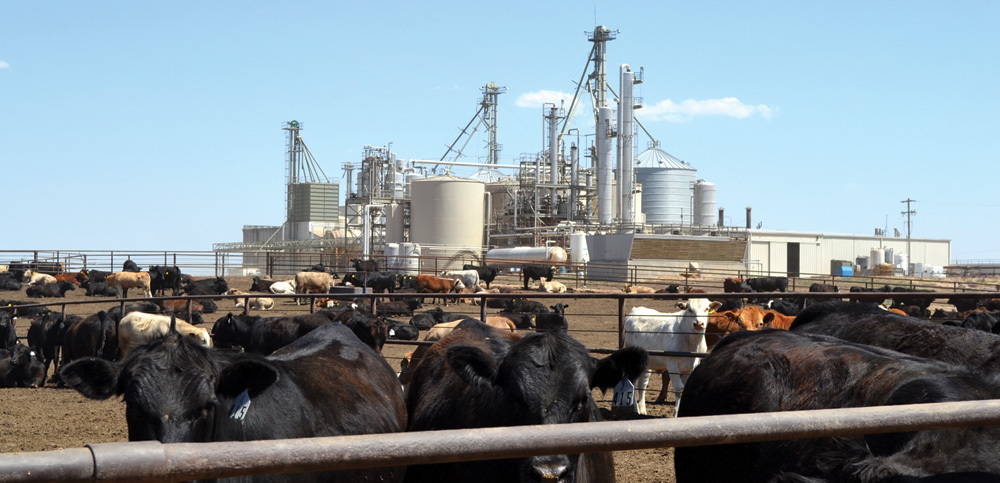
Cattlemen in the U.S. and Canada demonstrate feedlots and ethanol production are ideal companion enterprises
By Holly Jessen | June 06, 2011

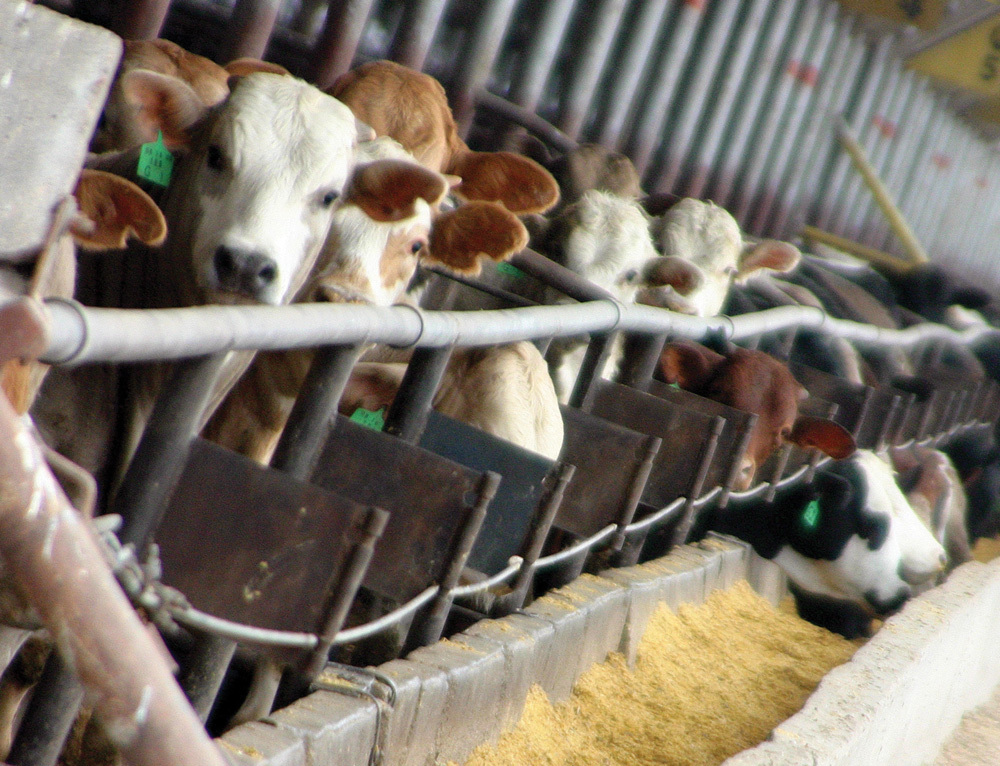
In every case, the cattle came first. In an effort to find inexpensive and efficient ways to feed cattle—and in some cases, to get rid of excess manure and the accompanying smell—feedlot owners built or are working to build co-located ethanol plants for a steady supply of wet distillers grains (WDGs).

Two companies have been doing it since 1982 and 1991—Reeve Agri Energy in Garden City, Kan., and Pound-Maker Agventures Ltd. in Lanigan, Saskatchewan. For the Reeve family business it was the opportunity to produce WDGs for use at its existing feedlot. Pound-Maker was established in 1970 by Saskatchewan farmers who were looking for a market for their crops. That quest later resulted in the construction of the co-located ethanol plant.

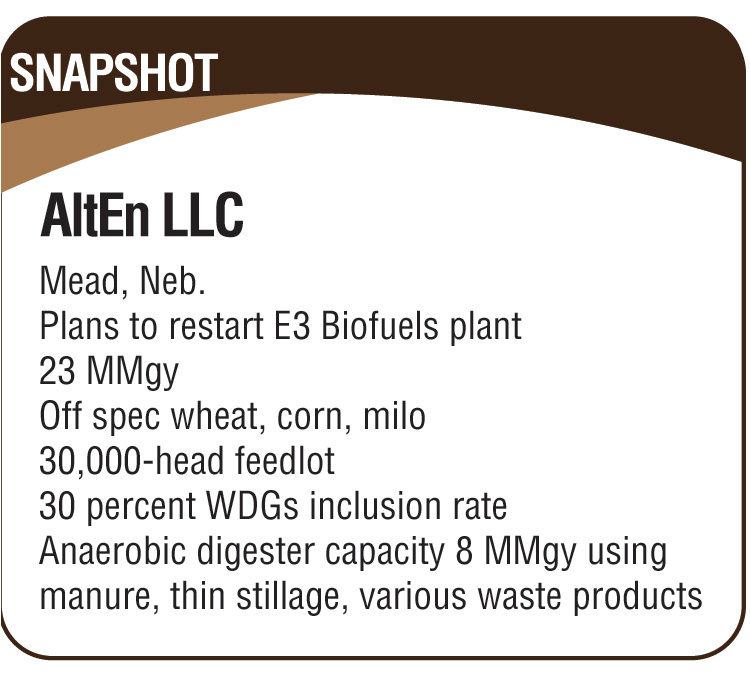
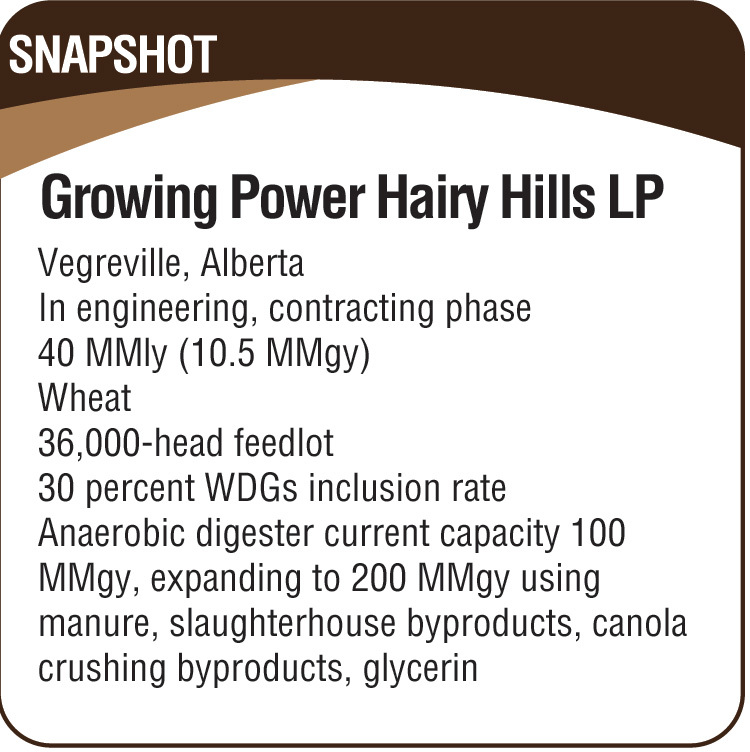
Two other projects in the works are aiming for closed-loop systems—feeding WDGs to the cattle, using manure from the cattle as a feedstock for anaerobic digesters and using the power from the digesters to keep the ethanol plant running. One of these is an ethanol plant in Mead, Neb. Perhaps best known by its former name, E3 Biofuels, it was built in 2007 but never reached its full potential after a boiler explosion. In Vegreville, Alberta, developers hope to break ground on an ethanol plant to complete the circle of the already functioning anaerobic digesters and on-site feedlot.

Co-location Pioneers

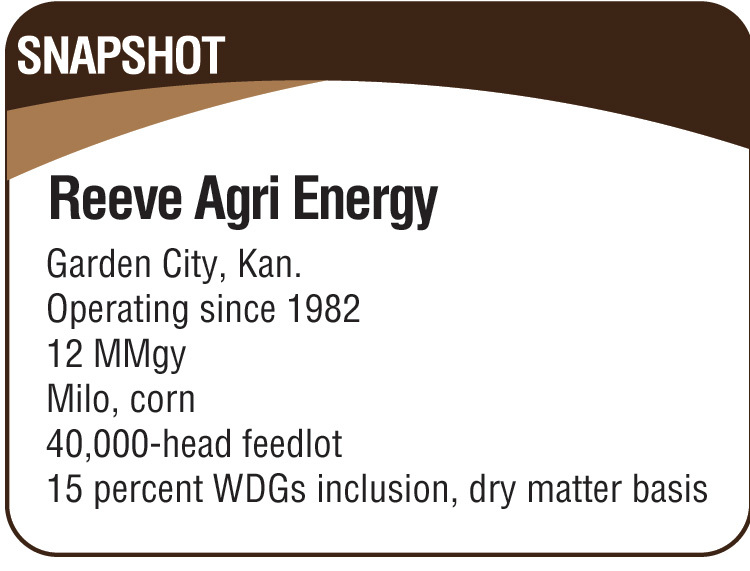
Lee Reeve can’t say for sure that Reeve Agri Energy was the first ethanol plant to be co-located with a feedlot, but it probably was. The Reeve family built the ethanol plant in 1982, starting out at 1.5 MMgy and 15,000 head of cattle, later expanding to today’s capacity of 12 MMgy and 40,000 head.

There was a big push for alternative technologies, such as biofuels, wind, solar and others, in the late 1970s, Reeve explains. The family viewed it as a good opportunity to produce some of the feed for their feedlot. They’d seen the early research and knew the value of WDGs. “It was very impressive,” he says. “That’s been reproven many times through the years.”

In the beginning, the WDGs was the main product of value and the ethanol was more like a byproduct. There was limited ethanol production then and WDGS had not yet saturated the market, as it has today, Reeve says. In fact, the product was so valuable as a protein source that he fed part of it to his cattle and sold the rest at 120 percent of the price of corn. He then turned around and bought more corn. Today, that business model wouldn’t make sense since DDGS is sold for 80 percent the price of corn. “That’s where the world has kind of changed,” he says.

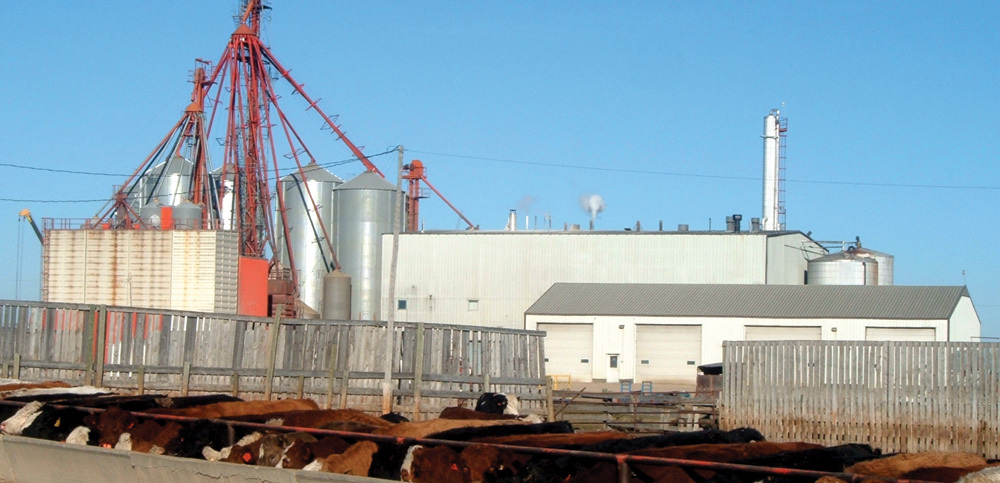
There are several synergies in co-locating the Reeve’s feedlot with ethanol production. First off, the feed mill is tied into the ethanol plant, meaning the WDGs drops out of the centrifuges straight into the feed mill to be mixed with other feed ingredients. There’s no freight bill to transport WDGs because the feedlot is right next door. Steam from the ethanol plant is used to steam flake grain used in the feed rations. Unlike a traditional feed mill, where steam flakers are typically shut down at the end of the day, Reeve Agri Energy steam-flakes grain 24 hours a day. “That won’t sound like much of a deal unless you are in the feed business,” he explains, adding that it’s difficult to shut down and restart the equipment and also allows for smaller equipment because it’s running twice as long.

Co-location also means energy and water savings. Because the company feeds all its WDGs to on-site cattle (at an inclusion rate of about 15 percent on a dry matter basis), the ethanol plant doesn’t require energy-hungry dryers. Fresh well water is used first for cooling in the ethanol plant, then goes to the cattle for drinking water—a real bonus in the winter because the cattle can drink it warm, saving them energy. Finally, excess water is used to irrigate nearby alfalfa crops, which are also fed to the cattle.

Reeve considers the limited ethanol capacity as one disadvantage to co-locating with a feedlot. The optimal savings in transportation and energy come when all the WDGs are fed to nearby cattle, thus it wouldn’t make sense to build a 100 MMgy ethanol plant next to a feedlot, Reeve says. While there are more opportunities for co-locating ethanol plants with feedlots, that’s somewhat limited, too, because there are only so many feedlots large enough. There are about 150 U.S. feedlots with 17,000 or more cattle and only a handful with about 75,000 head or more, he says.

Not long after Reeve Agri Energy ventured into the feedlot/ethanol co-location business, a company in Canada followed behind. A group of farmers established the Pound-Maker feedlot in the 1970s and expanded it from 2,500 head to 8,500 head in the mid-80s. Although some have confused the name with Poundmaker Cree First Nation reservation, the facility’s name is about fattening up cattle. “It’s as simple as making pounds,” says Keith Rueve, ethanol plant manager.

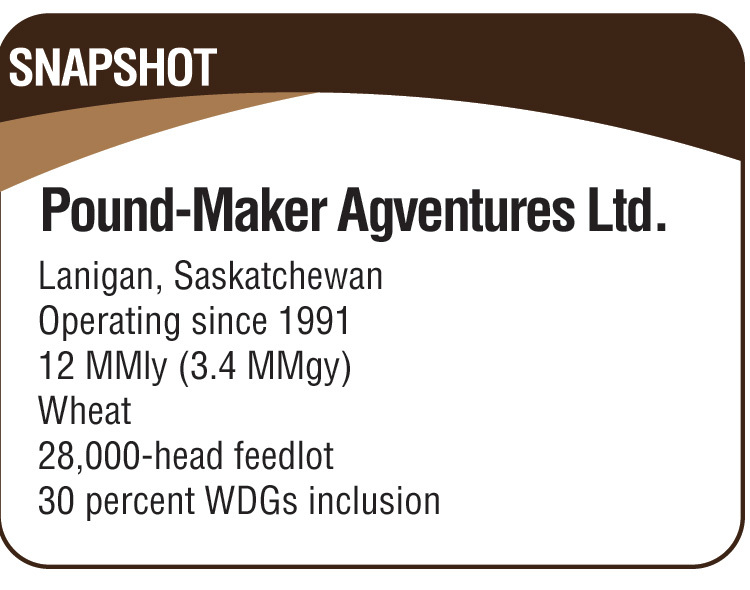
Lengthy investigations and feasibility studies were conducted before building a 10,000-head feedlot co-located with a 10 MMly (2.6 MMgy) ethanol plant in 1991. Production has since been ramped up to 13 MMly and 28,000 head today. Although feeding its own WDGs was part of the motivation for building the plant, it was more about finding additional markets for their grain, Rueve says. The cattle business is very cyclical and the idea was to share some risk and end up with a more stable business overall.

Similar to Reeve Agri Energy, Pound-Maker enjoys synergies between the two businesses. Feeding WDGs doesn’t just save on energy, it was a huge capital savings when the plant was built, Rueve says. The facility doesn’t require dryers or evaporators. Pound-Maker feeds about 30 percent WDGs, which has a moisture content of about 75 percent. In addition, the cattle drink the thin stillage from the ethanol plant, which contains about 8 percent solids. “We pump it directly to the bowls the cattle drink from,” he says.

Out with E3—In with AltEn

Perhaps no one was more disappointed when the $90 million E3 Biofuels project failed to reach full capacity than former CEO and majority owner Dennis Langley. In 2007 a boiler explosion early in the start-up process kept the 23 MMgy plant from fully commissioning and ultimately resulted in bankruptcy. “I’m not sure that there was ever an achievement of more than 30 percent of capacity past 10 days,” he says.

Now, nobody is more excited than Langley that the project has new life. In 2009, AltEn LLC of Kansas was the winning bidder at a bankruptcy auction. Langley owns the company that owns the feedlot and is an investor in AltEn. “The bankruptcy took longer than anybody thought possible, including me,” he says. The plant, newly renamed AltEn LLC, was then mothballed with the intention of eventually starting it up again. It will likely start producing again this year, depending on how quickly the boiler can be replaced and other minor modifications made, Langley says. If not, the company will wait until next year rather than work on the start up through the winter. The next step is to go on to do other closed-loop projects like this one, something that was part of the original plan. “It’s a very important evolution of the ethanol industry,” Langley says. “It could be a big shot in the arm for the entire industry and for green energy, period.”

The answer to what the company will do to make the project a success this time around is a simple one for Langley. It’s all about making sure the boiler doesn’t explode, he says with a laugh. The frustrating thing about the boiler mishap is that it’s a common and well-understood part of the process in many industries, not just ethanol production. In his years in business, Langley has been part of many boiler startups, none of which ended in explosions. The bigger questions about the project, such as the efficiency and capacity of the anaerobic digesters, yielded better-than-expected answers. The two 4 MMgy digesters operated at above capacity during testing that lasted six months for one digester and a year for the second one. Originally designed to provide 90 percent of the natural gas needs for the ethanol plant, the digesters outperformed that, and will actually provide 100 percent of the plant’s power needs. In other words, the new technology—the digesters—wasn’t the problem. The established technology—the boiler—failed. To use a basketball analogy, “we shot 100 percent from the three point line and blew the layup,” Langley says.

Besides feeding 100 percent of the WDGs to the cattle, 100 percent of the manure will go to the digester, plus the thin stillage from the ethanol plant. In addition, the company plans to take advantage of local waste streams, such as from restaurants, slaughterhouses, dairies or grocery stores. Although those items aren’t closed-loop feedstocks, the advantage for the ethanol plant would be collecting tipping fees from the businesses happy to get rid of their waste. 

At the end of the digester process the company will have a bio-friendly fertilizer for additional revenue. It also answers the critics that complain ethanol production takes petrochemical fertilizers to produce the feedstock for traditional ethanol production. “We actually give back more fertilizer than we take, by a long shot—by a factor of three,” he says.

Producing biogas for the ethanol plant’s power means it’s extremely energy efficient. The only outside energy use will be electricity, basically to turn on the lights, and gas for the vehicles driving around the facility, most of which will be E85 flex-fuel vehicles. “We literally have a 41 to 1 ratio,” he says. “In other words, for every Btu of fossil fuel that we use, we create 41 Btu, so we are by far the most efficient. Far more efficient than cellulosic, far more efficient than traditional ethanol, but that’s because we don’t use fossil fuel.”

Putting the three elements together—feedlot, digester and ethanol production—provides some serious positives. “It just makes good sense,” he says. “Not just environmental sense, but dollars and cents sense as well.”

Growing Power 

Highmark Renewables is the newcomer to the feedlot/ethanol plant co-location game—at least in that its ethanol plant has yet to be built. In other ways, specifically anaerobic digestion, Evan Chrapko of Highmark makes the case that the company is the world’s foremost expert on the subject, particularly with open pen feedlots and multiple feedstocks for the digester. “We’re pretty proud of having cracked the code on this one,” he tells EPM. All in all, the project has been 11 years and $25 million in research and development in the making, with building the ethanol plant the last step to complete the circle.

The story starts 11 years ago with manure. Brothers Bern and Mike Kotelko, owners of an Alberta feedlot, were concerned about smell, overloading the soil in the vicinity of the feedlot and the threat of possible contamination to the water table. Thinking to the future, the brothers established Highmark as an R&D company, of  which they are now majority owners along with Evan and Shane Chrapko, who serve as co-CEOs of the company. Highmark Renewables developed the company’s anaerobic digester technology, the Integrated bioMass Utilization System, or IMUS. This spring, the company received a patent for its Integrated bioRefinery technology, which pairs anaerobic digestion with other bio-production systems for ethanol, biodiesel or algae, plus other add-on options.

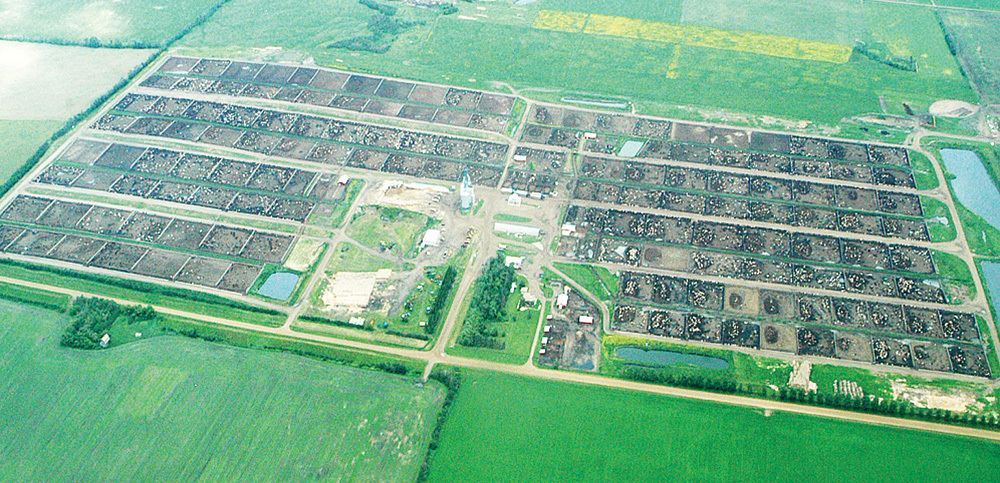
The company, which also offers its technology for licensing, is working to demonstrate the Integrated bioRefinery technology in Vegreville, Alberta, using the feedlot that prompted the R&D in the first place. Two on-site anaerobic digesters have been operating for the past six years, starting with a capacity of 100 tons of manure a day. In February an expansion wrapped up, bringing the capacity to 250 tons per day, or half the daily production of manure at the feedlot. The next phase is to increase the anaerobic digester up to 480 tons per day as well as build the co-located 40 MMly ethanol plant, Growing Power Hairy Hill LP. When it’s all said and done, the anaerobic digesters will have a total capacity of 200 MMgy. Besides producing power, the digestion process results in a pathogen-free high-value fertilizer product as well as a significant amount of nutrient-rich water that is recovered and used for crop irrigation.

The goal is to break ground on the ethanol plant sometime this summer or fall, or, if that doesn’t happen, early next year, Chrapko says. In late April, the company had 25 percent of the detailed engineering done and was working on getting bids. Once that process is completed the next step is financing the project, which has already received millions in funding from various sources.

With a closed-loop system, as the Vegreville project will be, all three main products, or legs of the stool, are important. The WDGs is the input for the cattle, the manure from the cattle becomes the input for the digester and the power from the digester runs the ethanol plant. The tricky part, he says, is sizing everything just right. “You’ve got to do some intense calculations when you are closing the loop like this,” he says.

For the feedlot, the fifth or sixth largest in Canada and in the top 20 in North America, having a co-located source of WDGs is going to be very valuable. Not only do cattle prefer WDGs to other rations, but the high moisture content means they require less drinking water. Plus, with the ethanol plant next door there’s no need to transport the water-heavy product long distances. “It’s way more efficient to send the wet distillers grains to the feedlot,” he says.

Chrapko also mentioned the energy savings for ethanol plants not requiring dryers. The good news doesn’t end there, however. Not having dryers will mean much smoother operation of the plant overall. “Jokingly, or not so jokingly, 50 percent of more of your operational snafus, hiccups and problems are in your dryers operation,” he says.

The digester will actually use four feedstocks. Besides manure, the company will also use specific amounts of byproducts from a slaughterhouse, such as blood, waste from a canola crushing plant and glycerin from a biodiesel plant. Anaerobic digesters are really just giant stomachs, Chrapko says. Like a person’s stomach, throwing in anything willy nilly could result in sickness, or even death. In other words, digestion could come to a screeching halt. It’s also a lot like baking a cake—a really gross cake—with ingredients like blood and manure. Like baking a chocolate cake, anaerobic digestion requires following a recipe with specific ingredients, amounts, temperatures and time periods.

That doesn’t mean, however, that Highmark’s digester technology is limited to only those four feedstocks. Other options are thin stillage or WDGs, dairy waste or separated organics from a city’s recycling program—the list goes on and on. “We have thousands of different recipes comprised of 40 different feedstocks,” he says.

When completed, the digesters will produce 2.4 megawatts of electricity for the ethanol plant, biogas plant and feedlot, in addition to 8 gigajoules of heat and steam for the ethanol plant. The remainder, in the neighborhood of 200 to 500 kilowatts, will be exported to the grid. Thanks to the power generated by the digester, the project will cut grams of carbon per megajoule of energy output by easily 20 grams or more. That’s lower than Brazilian ethanol, lower than cellulosic ethanol and lower than the requirements of the Low Carbon Fuel Standard coming out of California. “We’re not talking about old school ethanol, your grandfather’s ethanol, generation-one stuff,” he says. “We’re getting generation two outcomes, without any technology risk. We are doing it now with essentially generation-one components, cleverly put together.”

Author: Holly Jessen
Associate Editor, Distillers Grains Production & Markets
(701) 738-4946
hjessen@bbiinternational.com


0 Responses


    Leave a Reply

    Comments are closed